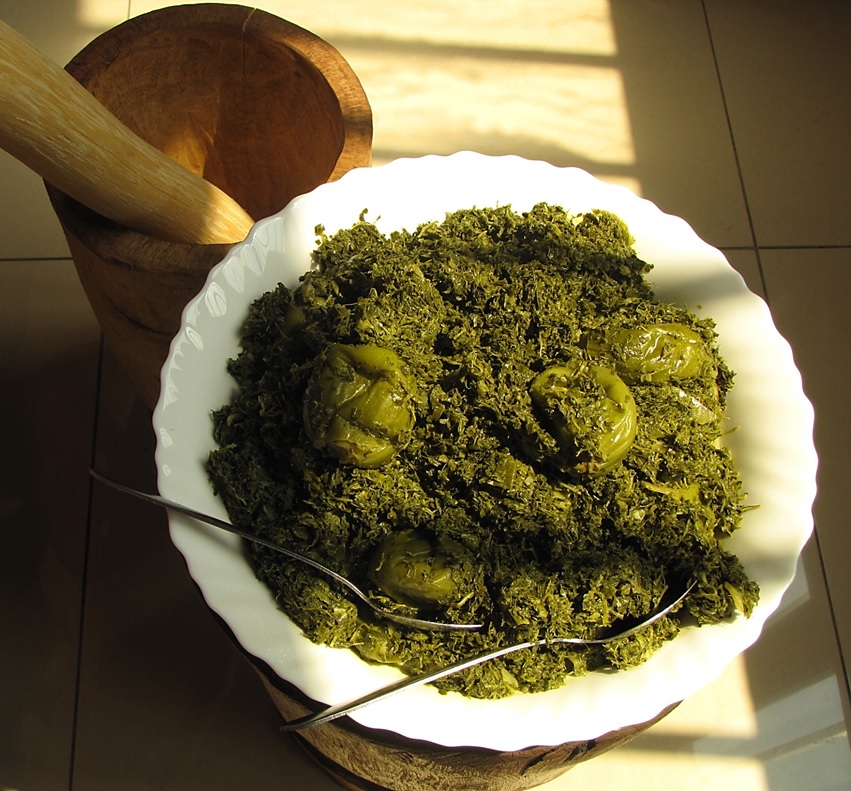
Saka-saka is a popular West African dish that features tender cassava leaves cooked with a flavorful blend of spices and ingredients. This nutritious stew is commonly enjoyed in countries such as Nigeria, Ghana, Cameroon, and Congo.
Ingredients
- 2 pounds (about 1 kg) fresh cassava leaves
- 2–3 tablespoons palm oil (substitute with vegetable oil if needed)
- 1 large onion, finely chopped
- 4–5 cloves of garlic, minced
- 1 pound (about 500 g) meat (e.g. chicken, beef, or goat), cut into bite-sized pieces
- 1–2 fresh tomatoes, diced
- 1–2 Scotch bonnet chile peppers (adjust according to your spice preference)
- 1 tablespoon ground crayfish (optional, but recommended)
- 1 tablespoon dried shrimp (optional, but adds depth of flavor)
- 1 African smoked fish (tilapia or mackerel), deboned and flaked
- 1–2 cups chicken or vegetable broth
- Salt to taste
- Pepper to taste
Equipment
- Large pot or Dutch oven
- Wooden spoon or spatula for stirring
- Cutting board
- Knife
- Blender or food processor
- Bowl for washing cassava leaves
Procedure
- Wash the cassava leaves thoroughly in a bowl of water to remove any dirt or debris. Drain and set aside.
- Using a blender or food processor, blend the cassava leaves until they are finely chopped. Set aside.
- Heat the palm oil in a large pot or Dutch oven over medium heat. Add the chopped onions and minced garlic to the pot, and sauté until they become translucent and fragrant.
- Add the meat to the pot and cook until it is browned on all sides.
- Add the diced tomatoes, Scotch bonnet peppers, ground crayfish, and dried shrimp to the pot. Stir well to combine, then allow the mixture to cook for a few minutes until the tomatoes start to soften.
- Add the blended cassava leaves to the pot, along with the flaked smoked fish. Stir everything together to ensure the leaves are well coated with the flavors.
- Pour in enough chicken or vegetable broth to cover the mixture. If you prefer a thicker stew, add less broth.
- Reduce the heat to low, cover the pot, and let the stew simmer for about 1–2 hours. Stir occasionally to prevent sticking and to ensure even cooking.
- After the stew has simmered and the flavors have melded together, taste and adjust the seasoning with salt and pepper as desired.
- Serve hot with a side of cooked rice, fufu, or plantains. Enjoy!
Note, tips, and variations
- Saka-saka is even more flavorful when left to sit for a few hours or overnight before serving. The flavors continue to develop and intensify over time.