Amish friendship bread is a cinnamon-flavored cake that uses the “discard” from a sourdough starter for part of the leavening. This recipe usually begins with someone giving away a cup (8 ounces / 240 mL) of starter. If you need to make and maintain your own starter, review the guidelines for sourdough starter or quick sourdough starter. The process leading up to baking day requires a little bit of organizational work, but the cake itself is easy to make and bake; all the ingredients are simply stirred together.
Despite the name, Amish friendship bread probably has no direct connection to the Amish communities, where “friendship bread” is ordinary bread given to someone who is sick or needs care.
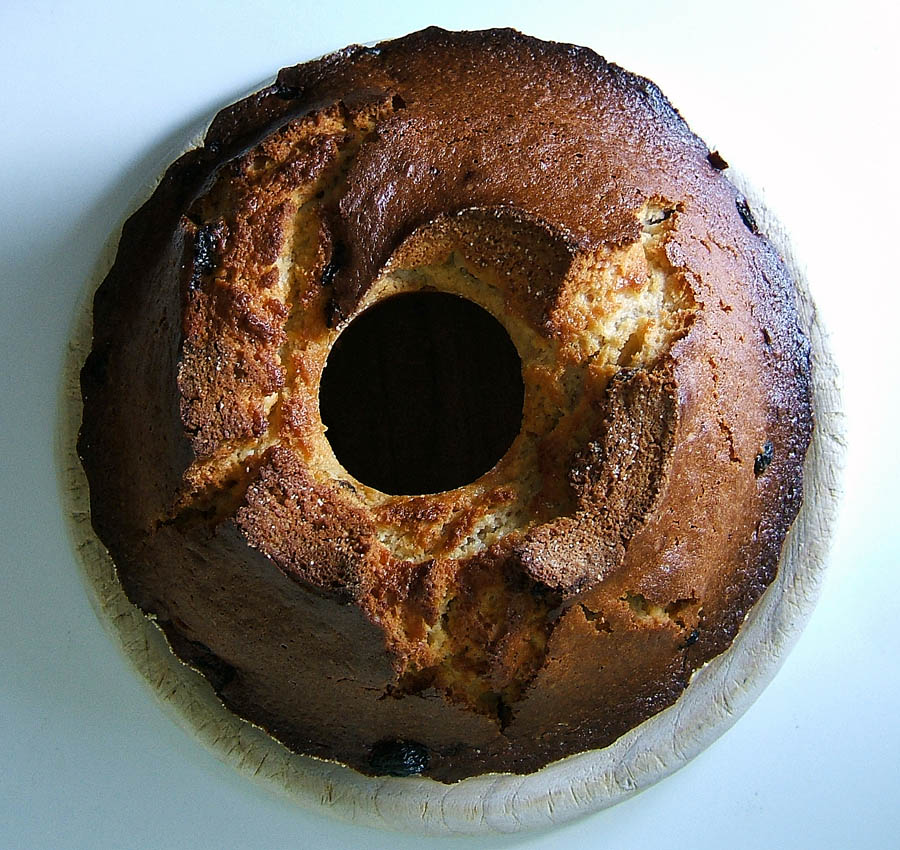
The cake can be served warm or at room temperature. It goes well with coffee or tea. Because it is an oil cake, it will keep fresh for about a week at room temperature. Cover with plastic wrap or put in a tin with a tight lid.
Starter schedule
The typical schedule looks like this:
- Day 1: Begin with 1 cup of mature starter (given to you by a friend or prepared yourself). Put the starter in a closed container in a warm place, such as on a kitchen counter near the stove.
- Day 2: Stir the starter to oxygenate it and promote healthy growth.
- Day 3: Stir the starter.
- Day 4: Feed the starter by adding 1 cup each of wheat flour, sugar, and milk. Stir until smooth.
- Day 5: Stir the starter.
- Day 6: Stir the starter.
- Day 7 (baking day): Feed the starter by stirring in 1 cup each of flour, sugar, and milk until smooth. Reserve about 1 cup (8 ounces 240 mL) of the resulting starter mixture for you to start the cycle again on day 1. Reserve 1–2 cups starter for making the cake, and discard or give away the remainder for others to start again on day 1.
If you have too much starter on hand and want to use it up instead of giving it away, then double the cake recipe. Extra sourdough discard can also be stirred into pancake batter or added to most bread recipes. To prevent this problem, you can feed a smaller amount of flour, sugar, and water in the future, or freeze the starter until you want it later.
Ingredients
Procedure
- Preheat the oven to 350 °F (175°C, gas mark 4—moderate).
- Grease and flour two loaf pans or two 9-inch round cake pans. Alternatively, line them with parchment paper.
- Combine the sourdough starter, oil, sugar, and eggs in a large mixing bowl.
- Combine the flour, baking soda, baking powder, salt, and cinnamon in a separate bowl. Stir this dry mixture into the wet mixture.
- Stir in the raisins or nuts, if using.
- Pour the batter into the prepared pans. Optionally, sprinkle a decorative amount of cinnamon on top of the cake batter.
- Bake at 350 °F (175°C, gas mark 4—moderate) for about 50–55 minutes if using loaf pans, or about 25–30 minutes if using round cake pans. The cakes are done when a toothpick inserted into the center comes out clean.
Notes, tips, and variations
- The sugar can be cut by up to half if you dislike sweet cakes. Sugar substitutes can be used in the cake recipe but not in the starter.
- Gluten-free flour substitutes can be used in the cake recipe. However, the starter contains gluten, so the cake would not be gluten-free.
- To reduce the fat content of the cake, half the oil can be replaced by an equal volume of unsweetened applesauce.
- This cake can be baked as cupcakes. Consider giving a friend some cupcakes with the starter and a copy of the recipe.
- If you make this recipe for people who might have allergies, remember the allergens in the starter as well as in the cake recipe. Taken together, the cake includes milk, wheat/gluten, eggs, and potentially nuts among the major food allergens.